I'm afraid that my time blogging on the anthropogenic disturbance of the global nitrogen cycle is drawing to a close..... In order to make the most of the information posted, and for me to have a personal refresher on a few things that I may have forgotten, I thought that I would try and produce a short summary of the key messages from the blog.
To start with, I'm conscious that I have not yet explained my blog title, I chose the 'Destroying life support' bit because that it exactly what the nitrogen cycle is - life support. Without the creation and transportation of reactive nitrogen in various forms, the earth could not support the levels of primary production that currently occur on the planet. The unfortunate situation is that through the advancement of the technologies (most notably the Haber-Bosch process and fossil fuel use in energy and transport) that have allowed the Earth to support so many additional lives, we are adding to the cycle in a way that is very damaging environmentally.
The anthropogenic disturbance on the global nitrogen cycle is a dramatic one. The cycle is changing faster than any other, due to a level of man-made influence which far outstrips our impact on the carbon cycle (Nr creation has increased by 120% since 1970 (Galloway et al., 2008). The environmental problems caused by this have been discussed and shown in several posts e.g. nitrogen's dark side, the nitrogen cascade and posts on eutrophication, acidification, diversity loss and impacts on the atmosphere and ocean.
Just as important, and more interesting to me personally, were the interactions between various different environmental processes arising from the disturbance of the N cycle. This was discussed early on in the post on Gruber and Galloway's earth-system approach and continued as a theme throughout in posts describing the impact of acidification on the ocean nitrogen cycle and the impact of oceanic nitrogen pollution on the atmosphere.
There was also some research thrown up which I found particularly unusual or surprising. For example, the work of Pregitzer et al. in Michigan where they found that inputs of Nr in forests increased the carbon sequestration of not only the plants, but also soils due to alteration of the forest microbial community. An excellent insight into past anthropogenic influence on Nr was described in the post on Holtgrieve et al. (2011), whose work analysing lake sediment records showed that anthropogenic disturbance has been happening since the late 19th century, a time earlier than thought previously. I feel that this was the most significant paper to be published during my time writing the blog.
Finally, I think possibly the most important topic for future management of the N cycle was the discussion of the nitrogen footprint calculator devised by Leach et al. in to bring the problem to the public's attention and emphasise the role that individual choices can play. Whilst writing the blog it quickly became apparent that the issues of excess Nr were appearing fairly frequently in scientific literature, but it was a challenge to find anything at all in the general media or even something as simple as a youtube video that might engage a wider audience. Things became easier as I found my way around the subject, but it appears that this issue is largely hidden from view. I believe this has a massive impact on the potential for managing the Nr problem, as public awareness is essential, particularly when our lifestyles and consumer choices (e.g. cutting back on overconsumption of meat and dairy) could do so much towards solving this major environmental problem.
I hope that the blog has given an informative and accessible insight into the disturbance of the global nitrogen cycle and has perhaps encouraged some people to consider the impact that their daily activities can have.
Thanks for reading!
Ed
Tuesday, 10 January 2012

Friday, 6 January 2012
Oceanic Dead Zones: Is agriculture destroying marine habitats?
Continuing on the theme of anthropogenic nitrogen’s impact on the ocean, it is time I did a post dedicated to a major nitrogen-related environmental problem: Oceanic dead zones. ‘Dead Zones’ are areas of the Ocean where the bottom water has become anoxic (i.e. has low or zero dissolved oxygen concentration), very few organisms are able to survive in such low oxygen conditions. Dead zones occur along large sections of the coastline of major continents and are continuing to spread over the sea floor, destroying the habitat of many organisms.

Fig. 1. ‘Global distribution of 400-plus systems that have scientifically reported accounts of being eutrophication-associated dead zones.’ (Diaz and Rosenberg, 2008)
These dead zones are created when the organic matter produced by phytoplankton at the surface of the ocean (in the euphotic zone) sinks to the bottom (the benthic zone), where it is broken down by the action of bacteria, a process known as bacterial respiration. This is problematic because while phytoplankton use carbon dioxide and produce oxygen during photosynthesis, bacteria use oxygen and give off carbon dioxide during respiration. The bacteria use up the oxygen dissolved in the water which is essential to all of the other oxygen-respiring organisms on the bottom of the ocean, such as crabs, clams and shrimp, and also those swimming in the water, such as fish and zooplankton. The overall impact is to make large parts of the ocean uninhabitable for the majority of organisms. For further explanation there is an excellent review of dead zones in the ‘Science Focus’ section of the NASA website, which provided much of the core information for this post.
An influential paper on dead zones is from Diaz and Rosenberg, published in Science in 2008, they state that oceanic dead zones have spread exponentially since the 1960s and that this formation of dead zones is exacerbated by anthropogenic influences on nitrogen entering the ocean due to riverine runoff of fertilizers and the burning of fossil fuels. This extra nutrient input fuels coastal eutrophication and the accumulation of particulate organic matter, which encourages microbial activity and the consumption of dissolved oxygen in bottom waters. The resulting lack of oxygen causes fish to migrate away from affected waters and the death of large numbers of less mobile organisms.
The issue is also discussed in The Scientific American magazine, the article includes this quote from Robert Diaz (co-author of the paper discussed above) highlighting the main cause of the problem
"The primary culprit in marine environments is nitrogen and, nowadays, the biggest contributor of nitrogen to marine systems is agriculture. It's the same scenario all over the world.." (R. Diaz, Marine Biologist, The College of William and Mary)
The article also investigates various possible measures that could be used to prevent coastal eutrophication, but preventing damage caused by agriculture is highly problematic. Suggested solutions range from engineering crops to overexpress a gene causing roots to absorb more nitrogen, to large-scale geoengineering projects, such as attempting to artificially aerate the ocean. The latter solution sounds unlikely in my opinion, as trying to directly influence an open system on such a massive scale is sure to be very challenging, even though experiments on a much smaller scale have shown success. It seems that dead zones are another anthropogenic nitrogen related environmental problem that may require more drastic change to slove!
Wednesday, 4 January 2012
Nitrogen pollutants in the oceans: The impact on the atmosphere
As my research for the blog continues, I’m finding that the role of nitrogen in the world’s oceans is more important than I had imagined, and anthropogenic changes to the ocean’s nitrogen cycle can have far reaching effects, many of which are uncertain but potentially significant.
The paper that I want to draw attention to today is by Duce et al. and was published in Science in 2008. The paper is an interesting one as it highlights the impact that atmospheric anthropogenic reactive nitrogen being dissolved in the open ocean has on the ability of the ocean to act as both a source and a sink for greenhouse gasses.
According to the research, this anthropogenic disturbance could cause around 3% of annual increase in new ocean biological production. This causes a removal of CO2 from the atmosphere as the marine carbon that is used to create new life must remain in constant equilibrium with the carbon in the atmosphere. However, this greenhouse gas reduction is less significant when the possible increase in nitrous oxide is considered. Duce et al. state that as much as an extra 1.6 teragrams of nitrous oxide (N2O) could be produced as a result of the increased reactive nitrogen availability, accounting for around 2/3 of the reduction in radiative forcing achieved by the extra carbon sequestration.
According to the research, this anthropogenic disturbance could cause around 3% of annual increase in new ocean biological production. This causes a removal of CO2 from the atmosphere as the marine carbon that is used to create new life must remain in constant equilibrium with the carbon in the atmosphere. However, this greenhouse gas reduction is less significant when the possible increase in nitrous oxide is considered. Duce et al. state that as much as an extra 1.6 teragrams of nitrous oxide (N2O) could be produced as a result of the increased reactive nitrogen availability, accounting for around 2/3 of the reduction in radiative forcing achieved by the extra carbon sequestration.
Monday, 2 January 2012
The (complex!) impacts of ocean acidification on nitrogen cycling
Sticking to the topic of acidification…I’ve encountered some research on acidification of the world’s oceans and how this may be impacting on the way nitrogen is cycled within them.
An article appearing in Proceedings of the National Academy of Sciences (PNAS) by Beman et al. (2010) details how the quantity of anthropogenic carbon dioxide dissolved in the oceans, and the acidification that occurs as a consequence, has impacted the microbially mediated biogeochemical processes that are so vital to the response of the earth system to environmental change.
Beman et al. state that microbial nitrification (a process where ammonia is oxidised to nitrite and then nitrates by two different groups of microbes) decreased at all of the 6 sites analysed, in both the Pacific and Atlantic oceans, when ocean pH was experimentally reduced. Based on their experimental data, Beman et al. believe that that ocean acidification could reduce nitrification rates by 3–44% within the next few decades; they say that this will affect oceanic nitrous oxide production, reduce supplies of oxidised nitrogen in the upper layers of the ocean, and fundamentally altering nitrogen cycling in the sea.
Beman et al. state that microbial nitrification (a process where ammonia is oxidised to nitrite and then nitrates by two different groups of microbes) decreased at all of the 6 sites analysed, in both the Pacific and Atlantic oceans, when ocean pH was experimentally reduced. Based on their experimental data, Beman et al. believe that that ocean acidification could reduce nitrification rates by 3–44% within the next few decades; they say that this will affect oceanic nitrous oxide production, reduce supplies of oxidised nitrogen in the upper layers of the ocean, and fundamentally altering nitrogen cycling in the sea.
The point about reduced production of nitrous oxide is an interesting one, as it is a potent greenhouse gas (298 times more impact 'per unit weight' than CO2 over a 100 yr period, according to the IPCC) and the ocean is already a significant emitter to the atmosphere. However, there is a chance that this may be offset by other changes, such as increased contributions on nitrogen to the ocean.
Marine food webs can also be affected. Acidification could produce a competitive shift away from ammonia-oxidising organisms, this would result in less nitrate being produced and ammonia would instead be converted into other forms such as regenerated ammonium. An increase in ammonium based primary production would cause a cascade of complex effects throughout marine food webs.
Friday, 30 December 2011
Acidification caused by nitrogen deposition
I’m going to restart the blog after the Christmas break by discussing acidification, another environmental issue caused by human interference in the nitrogen cycle. Soil acidification is one probable mechanism linking nitrogen deposition to plant diversity loss, a topic already blogged on earlier this month. I’m hoping this post should go some way to explaining the processes occurring to produce the acidification effect and the damage that is currently being caused as a result.
Atmospheric nitrogen deposition can result in soil acidification directly as a result of acid deposition (nitric acid) and indirectly through processes and reaction in soil and water (Stevens et al., 2010). This indirect acidification is produced by nitrogen deposition from airborne sources, such as nitrogen oxides (produced by fossil fuel burning for power and transport), or ammonia (produced as a result evaporation from manure used in agricultural processes). Some statistics indicate that the quantity of these compounds being emitted into the atmosphere has in fact been falling over the last few decades, land based emissions of nitrogen oxides in Europe have fallen by over 30% from 1980-2000, but this has been largely offset by increased emissions at sea. European ammonia emissions from agriculture did fall by 25% between 1990 and 2000, possibly due to changes in handling of manure (statistics are from the Air Pollution and Climate Secretariat).
Atmospheric nitrogen deposition can result in soil acidification directly as a result of acid deposition (nitric acid) and indirectly through processes and reaction in soil and water (Stevens et al., 2010). This indirect acidification is produced by nitrogen deposition from airborne sources, such as nitrogen oxides (produced by fossil fuel burning for power and transport), or ammonia (produced as a result evaporation from manure used in agricultural processes). Some statistics indicate that the quantity of these compounds being emitted into the atmosphere has in fact been falling over the last few decades, land based emissions of nitrogen oxides in Europe have fallen by over 30% from 1980-2000, but this has been largely offset by increased emissions at sea. European ammonia emissions from agriculture did fall by 25% between 1990 and 2000, possibly due to changes in handling of manure (statistics are from the Air Pollution and Climate Secretariat).
There are several papers indicating the damage caused to vegetation as a result of acidification. One such paper is from Horswill et al. (2008), whose experiments in highly nitrogen and acid rain polluted regions of the UK found that Nitrogen deposition treatments caused grassland soils to lose 23 to 35% of their total available bases (Ca, Mg, K, and Na) and treated areas became acidified by 0.2 to 0.4 pH units. This study provided the first definitive evidence that nitrogen deposition depletes base cat ions from grassland soils.
The problem of acidifying pollutants is a serious one, and it is necessary to take a broad geographical approach to understand the solutions and dangers. Nitrogen and sulphur oxides can be transported thousands of kilometres by the air, this means that some countries are net exporters of these pollutants and others net importers.
There are two main factors that determine which areas are affected by acidification: 1) the amount of acid deposition and 2) the resistance of the soil to pH change. The limits to what a particular area can tolerate in terms of acidifying pollutants are called critical loads, in order to make sure that critical loads in Europe are not exceeded it is necessary to reduce emissions of sulphur dioxide and nitrogen compounds in parts of Europe by 80-90% compared with 1990 levels (Air Pollution and Climate Secretariat).
There are two main factors that determine which areas are affected by acidification: 1) the amount of acid deposition and 2) the resistance of the soil to pH change. The limits to what a particular area can tolerate in terms of acidifying pollutants are called critical loads, in order to make sure that critical loads in Europe are not exceeded it is necessary to reduce emissions of sulphur dioxide and nitrogen compounds in parts of Europe by 80-90% compared with 1990 levels (Air Pollution and Climate Secretariat).

Fig 1. 'Map indicating the deposition of hydrogen ions that sensitive ecosystems across Europe can tolerate without being acidified.' (Air Pollution and Climate Secretariat)
It seems that although progress has been made on reducing the production of the nitrogen and sulphur pollutants that cause acidification, significantly more action is required if we are to prevent continuing damage to the vulnerable ecosystems shown above. Reducing the human input of nitrogen compounds to the atmosphere is a key part of this, requiring changes in the way we use and generate energy for our homes, industries and transport.
Saturday, 24 December 2011
Climate-smart agriculture
After considering the various detrimental impacts of the anthropogenic input of nitrogen into the biosphere, which have been and will continue to be discussed on the blog, it is also important to look at solutions to this environmental problem. Below is a youtube clip on 'climate smart agriculture', it is mainly focused on the carbon implications of agriculture, however the same concept of finding ways to increase yields without the excessive use of resources will reduce the anthropogenic impact on both nitrogen and carbon cycles.
I found the video whilst reading another blog, 'big picture agriculture' , it was originally produced to introduce the Learning Events section of Agriculture and Rural Development Day at the recent United Nations COP17 climate change conference in Durban, South Africa, Dec 2011. Information on the Cimate Change, Agriculture and Food Security research program can be found at www.ccafs.cgiar.org
On a related note, there is also an interesting article from outreach magazine on 'sustainable intensification' , published for day 9 of the COP17 conference.
I found the video whilst reading another blog, 'big picture agriculture' , it was originally produced to introduce the Learning Events section of Agriculture and Rural Development Day at the recent United Nations COP17 climate change conference in Durban, South Africa, Dec 2011. Information on the Cimate Change, Agriculture and Food Security research program can be found at www.ccafs.cgiar.org
On a related note, there is also an interesting article from outreach magazine on 'sustainable intensification' , published for day 9 of the COP17 conference.
Tuesday, 20 December 2011
Can reducing inputs of reactive nitrogen really reduce eutrophication?
I’ve come across an interesting debate in the literature on the benefit of nitrogen management with respect to reducing eutrophication, a widely known consequence of anthropogenic nutrient inputs to aquatic ecosystems.
Schindler et al. (2008) carried out a 37 year experiment in a small lake designed to test the assertion that controlling nitrogen inputs could be effective in controlling eutrophication. Over the 37 year period, the annual addition of phosphorous remained constant, whereas the amount of nitrogen added was gradually reduced each year. For the final 16 years of the experiment only phosphorous was added to the lake. The results showed that reducing nitrogen inputs increasingly favoured nitrogen-fixing cyanobacteria as a response by the phytoplankton community to extreme seasonal nitrogen limitation. The additional nitrogen fixation that resulted allowed biomass to continue to be produced in proportion to phosphorus, and the lake remained highly eutrophic, despite showing indications of extreme nitrogen limitation seasonally. These results led Schindler et al. to conclude that management of eutrophication is dependent only on the reduction of phosphorous inputs.
The trends in nitrogen/phosphorous ratio and phytoplankton biomass occurring during the same experiment were later investigated by Scott and McCarthy (2010) and this resulted in an alternate conclusion. Scott and McCarthy noted that after 1990 (the date when nitrogen addition to the lake ceased) the total N concentration decreased, which resulted in a decrease in the ratio of total N to total P and suggested increasing N deficiency. There was also a significant decrease in phytoplankton biomass between 1997 and 2005. These observations led to the conclusion that the lake had become increasingly N-limited since the input of nitrogen was stopped and that natural nitrogen fixation by cyanobacteria wasn’t enough to make up the shortfall in Nr concentration. It was also found that phytoplankton biomass decreased in response to the decreased N availability, leading Scott and McCarthy to conclude that the degree of eutrophication can in fact be controlled by managing N inputs together with phosphorous.
Saturday, 17 December 2011
Has the anthropogenic production of reactive nitrogen impacted more remote ecosystems…and for how long?
There was report published yesterday from Holtgrieve, et al. in Science which I feel is highly relevant to the blog and is one of a steady number of papers being published in recent times on the issue of reactive nitrogen.
The report details the analysis of the stable nitrogen isotope ratios (15N:14N) found in dated sediment cores taken from 25 pristine northern hemisphere lakes. Looking into the sediment record in this way enables scientists to infer the effect humans may have had on the nitrogen cycle in the past. This is possible because changes in the N isotopic composition of the reactive nitrogen (Nr) found in the atmosphere can indicate historic variation in the contributions from human-derived sources. The Nr produced through human activity (e.g. fossil fuel burning and the production and use of fertilizers) has depleted ratios when compared with catchment and preindustrial atmospheric N sources.
The analysis found that changes to the N isotope ratio and the increased presence of isotopically lighter nitrogen (often from anthropogenic sources) started during the late 19th century, a period before artificial fertilizers, a major source of Nr, were widely used. However, this period does coincide with a large global increase in fossil fuel burning as the world became more industrialised. There is a second major shift in ratios noted across the range of sediment cores at around 1970, a time when the production of artificial nitrogen fertiliser was rapidly increasing. The effects of these two anthropogenic influences were shown in the sediment record to be immediate and reached across all the core sites. This challenges the perception of nitrogen deposition as a problem with impacts mainly limited to the area surrounding the source.
Friday, 16 December 2011
A nitrogen footprint warning
This article from April this year is posted on the Guardian environment section; it highlights the key headline statements made in the European Nitrogen Assessment (ENA), a publication discussed previously on the blog.
The main claim selected by the article is that the damage to water, health, wildlife and climate caused by nitrogen pollution has a financial cost of £650 to every person in Europe. It is later explained that the annual Europe-wide cost is estimated at €70bn-€320bn (£62bn-£282bn), working out at between a minimum of £130 and a maximum of £650 per person. The financial argument is weakened slightly when the €25bn to €130bn (£22bn-£115bn) benefits to agriculture that artificial nitrogen fertilisers deliver are considered, this is a very similar figure to the estimated environmental cost of €25bn to €145bn (£22bn-£128bn). However, the additional cost to our health and well being is significant, it is claimed that nitrogen pollution in the atmosphere reduces life expectancy over much of Europe by up to six months. This and the damage to fish stocks and enhancement of global warming have far more than simply a financial cost to the people of Europe.
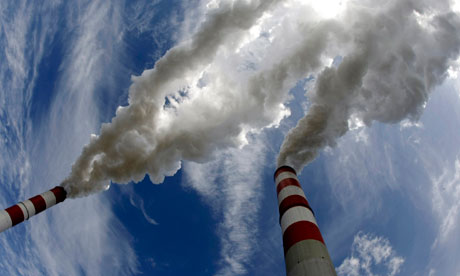
The article tells us the ENA calculates that up to 60% of nitrogen damage occurs from fossil fuel burning for energy and transport, so more efficient energy use in the home and in our transport might be an important part of mitigating the problem.
Furthermore, a highly significant portion of agricultural nitrogen pollution is due to meat and dairy farming, because livestock require vast quantities of food grown using fertilisers. This point was made in comment from Dr Mark Sutton, of the UK's Centre for Ecology and Hydrology, who stated that the numbers of livestock we keep are important in determining the scale of environmental impacts. The diet of most Europeans contains 70% more meat and dairy than is necessary, so it seems that there is room to reduce the problem, although this not an easy sacrifice to convince many to make!
Thursday, 15 December 2011
Calculate your personal nitrogen footprint!
I have come across an interesting online tool that allows you to calculate your personal ‘nitrogen footprint’. It seems like a fairly good way to engage the public with the problem of anthropogenic nitrogen deposition and, like the carbon footprint concept, it promotes taking some personal responsibility in solving the problem. Unfortunately, because the tool has only been recently developed, there is not yet a version of the calculator designed for UK residents (it is currently in development), but if you happen to live in the US, the Netherlands or Germany it is ready to use!

An explanation of the methodology used by the creators (James Galloway, Allison Leach and colleagues in the US and Netherlands) to develop the N-footprint calculator is due to be published in January 2012, a draft copy of the paper (Leach et al.) has been made available online. At a basic level, the calculator works by scaling the average per capita data on reactive nitrogen loss to the environment based on how an individual answers questions on resource consumption. The ‘N-Calculator’ is a an attempt to improve communication to help consumers minimise their disruption of the nitrogen cycle, it is planned that the tool will sit alongside other tools that calculate the footprints of producers and another that calculates the effect of policy decisions on nitrogen footprints. These tools are part of an overall system called ‘N-Print’. An article was published back in February on ScienceDaily describing the project. Included is a quote from Allison Leach stressing the importance of wider awareness of the issue:
"Solving the nitrogen dilemma is a major challenge of our time…..By calculating our individual impact, and taking small steps to reduce it, we can all play a part -- and send a strong message to our nation's leaders that we want this issue taken seriously." (A Leach, ScienceDaily 22/2/11)
Friday, 9 December 2011
Diversity Loss due to Nitrogen Deposition
In this post I’m going to look at another of the important environmental impacts of the anthropogenic alteration of the global nitrogen cycle: loss of diversity. A key recent paper in this area has been written by Bobbink et al. (2010), who give a synthesis of the global changes in terrestrial plant diversity caused by nitrogen deposition.
Bobbink et al. state that nitrogen accumulation is the main driver of changes to species composition across the whole range of global ecosystem types. This is because N accumulation drives competitive interactions that lead to composition change and can also produce conditions that are unfavourable for some species. There are also other effects playing a supporting role, such as the toxic nature of N gasses, the long-term negative effects of increased ammonium and ammonium availability, and acidification, in addition to more localised secondary stresses. The main impacts of increased nitrogen deposition on terrestrial ecosystems are summarised in the diagram below: (Bobbink et al., 2010)

(positive (+) and negative (-) feedbacks are shown in brackets, ↑ denotes productivity increase ↓ productivity decrease)
Bobbink et al summarise the impacts of N deposition in every ecosystem type and the mechanisms by which they occur. They have also created a new method to identify the ecosystems of high conservation value that are most threatened by the trend of increasing nitrogen deposition. This has been done by overlaying modelled nitrogen deposition with WWF G200 ecoregions, ensuring that both diversity hot spots and regions with their typical ecosystems are covered. Importantly, the ecoregions relate to ecosystem types whose response at different locations to N deposition can be compared and contrasted. The model show the areas of greatest deposition to be Europe, N. America, southern China and parts of southern and SE Asia, by 2030 Latin America and Africa are also predicted to be more significantly affected (see below).

The total N deposition rates for (a) the year 2000 and (b) the year 2030 within the G200 ecoregions (deposition outside these areas is not shown.) (Bobbink et al., 2010)
Bobbink et al. state that it could be later than we think in the fight against biodiversity loss due to N deposition, as the problem in boreal forests, mediterranean systems, and some tropical savannas and montane forests could be more serious than thought previously. They say that there are many questions about the impacts of N deposition on biodiversity still open, particularly in more remote regions.
Friday, 2 December 2011
European Nitrogen Assessment: Launch Video
One of the few quality videos that I've been able to find on this topic so far, created for the launch of the European Nitrogen Assessment back in April. Definitely the best attempt to highlight the problem I've seen so far.
Caption: In a five year project funded by the European Science Foundation programme "Nitrogen in Europe", 200 scientists/experts in the field produced "The European Nitrogen Assessment", which explains the state of the threats to water, air and soil quality and the impacts on biodiversity and climate change in Europe and highlights the possible solutions.
Caption: In a five year project funded by the European Science Foundation programme "Nitrogen in Europe", 200 scientists/experts in the field produced "The European Nitrogen Assessment", which explains the state of the threats to water, air and soil quality and the impacts on biodiversity and climate change in Europe and highlights the possible solutions.
Management of Nitrogen: Recent and Current Research and Working groups
The importance of the global nitrogen cycle with respect to its impact on climate has only recently moved towards the top of the scientific agenda. In November 2009, at the COP15 UN Climate Change Conference in Copenhagen, a side event was hosted entitled ‘Options for Including Nitrogen Management in Climate Policy Development’, intending to highlight the need for a new assessment of nitrogen-climate links and possible nitrogen management strategies that may reduce the extent of climate change. A press release on the event by the International Nitrogen Initiative (INI) can be found here.
The most recent INI event, a Workshop on Nitrogen and Climate, took place this month in the Netherlands, unfortunately, it looks as if the INI website has seen little updating recently…hopefully some details and findings will be published there soon!
A key recent publication on the subject of nitrogen management is the European Nitrogen Assessment: sources, effects and policy perspectives, a report launched this April. It is the first comprehensive scientific assessment for European policymakers on the problem of excess nitrogen, it also estimates economic cost of the damage caused, and defines the geographical areas at greatest risk.
An article from the Centre for Ecology and Hydrology noted the key messages from the assessment:
- At least ten million people in Europe are potentially exposed to drinking water with nitrate concentrations above recommended levels.
- Nitrates cause toxic algal blooms and dead zones in the sea, especially in the North, Adriatic and Baltic seas and along the coast of Brittany.
- Nitrogen-based air pollution from agriculture, industry and traffic in urban areas contributes to particulate matter air pollution, which is reducing life expectancy by several months across much of central Europe.
- In the forests atmospheric nitrogen deposition has caused at least 10% loss of plant diversity over two-thirds of Europe.
The report has been made available to download for free on the Nitrogen in Europe website.
Subscribe to:
Posts (Atom)